












Phlegm: What You Need to Know and I Would Do
There are two alternatives for relieving phlegm: Get rid of the cause(s) and it will probably soon disappear including, of course, the discomforts or symptoms now being experienced. Or just deal with the latter (symptoms) and continue medicating them as they comeback. If you would rather get rid of the "pain" once and for all, please, then go the cause. This is what the publication we offer, bellow, is all about. We have a special offer going on now:
Phlegm, believe it or not, is your friend. Let's find out why:
What is phlegm?
It is a frontline defense mechanism of the respiratory system. It uses a specialized type of mucus produced only in the breathing organs, but not in the nasal cavity. Besides having the usual chemical contents of mucus--mucins, salts, electrolytes, etc--it also packs a very powerful array of virus and bacteria fighting substances. It is very sticky so it can hang on securely where it's needed and trap and destroy those unwanted invaders. When its job is done it begins to detach itself and move, with the help of the cilia, toward the throat area, laden with dead bacteria, viruses, germs. This is why phlegm should not be swallowed. Keeping the sinus cavity healthy helps prevent diseases of the sinus cavity, sinus infections, sinus drainage, sinus pressure, drainage, etc. Food choice, especially with respect to dairy products, is important in avoiding sinus and allergy issues with their excessive mucus telltale.
How is mucus produced?
Human mucus found in the breathing organs is also called phlegm, and it is produced by and covers the mucous membranes lining those organs--except the nasal cavity. The mucous fluid is produced by specialized airway--trachea, bronchus, bronchioles--epithelial cells called goblet cells and by the submucosal glands. The secretion they produced is rich in glycoproteins, water and it is very sticky. Having a very important function to fulfill, mucus protects the epithelial cells which are part of the membranes which line those respiratory organs.. An important function of mucus is to protect against infection--bacteria, viruses, germs, foreign particles. It also provides moisture to the air when it is very low. Unknown to many he average person produces up to a quart of a watery, clear mucus every day, this is deemed to be normal. Nasal mucus, on the other hand, is produced by the nasal mucosa and lack the stickiness of phlegm, previously described.
Why does production of mucus increase dramatically in the upper respiratory tract? It is often a symptom of some common ailment, such as: colds, a virus infection, or bacterial infection. The excessive mucus can cause, in turn, such other disorders as: sinus pressure,congestion--the quick relief of these ailments using such procedures as acupressure (sinus pressure points) is recommended. It becomes obvious then that a normal person, or animal, need to produce mucus to keep healthy. However when mucus becomes thick and changes color then we need to ascertain the cause and do something about it, before a more serious health condition develops.
More on mucus production can be found on other pages of this site, and also in the bibliography and biographical notes of the author.
Where is phlegm produced?
Unlike yellow or green mucus which are produced by the nasal and sinus cavities, phlegm is produced by:
- the lungs
- throat passages
- bronchial tubes
- bronchiole
- other parts of the respiratory systems except the nasal cavity
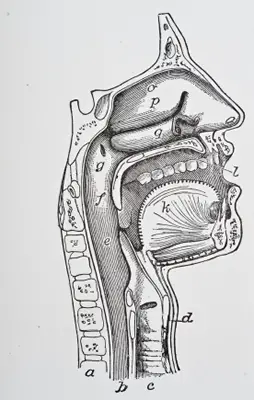
Nasal Cavity and Upper Respiratory Tract
a - vertebrae, b - esophagus, c - trachea
d - cricoid cartilage, e - laryngopharynx, f -
pharynx, g - nasopharynx, k - tongue,
l - hard palate,
o - superior turbinate,
p - middle turbinate, q - inferior turbinate
The purpose of phlegm
Phlegm is sometimes preceded by post-nasal drip and is a water based gel consisting of strong germ fighting substances produced by the body. Its primary purpose is to:
- aid the regular immune system when it gets overloaded
- trap microbes, viruses, e.g., from colds, bacteria, unwanted particles
- protect the lungs from infections and damage from any of the above organisms, etc.
- protect all other parts of the respiratory system likewise
Once it has done its job and it's loaded with those trapped elements it detaches itself. Then moves toward the throat where it can be coughed out. This explains why phlegm should never be swallowed.
Phlegm can be a symptom of:
Various health conditions depending on the presence of other symptoms and the phlegm color. Generally phlegm can be associated with the ailments that follow:
- acute upper respiratory tract infection caused by a "cold" or "flu"
- pneumonia
- bronchitis
- bronchiectasis
- tuberculosis--especially when accompanied by blood in the sputum
- lung cancer
- asthma
- chronic sinus problems
Sinus infection and phlegm:
Sinus infection symptoms can be associated with phlegm and often start with an irritation of the sinuses caused by:
- a virus or bacteria
- allergic reaction to pollens, sometimes with drainage
- smog or smoke
- house dust
- smog or other environmental elements
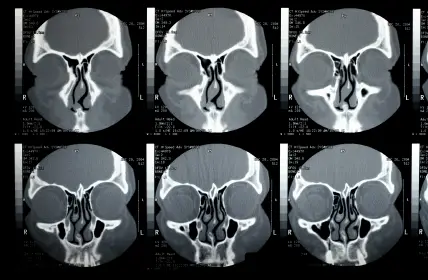
Mucus accumulates in the sinus cavities, stagnates, nasal and sinus pressure builds up. After several days of this an infection starts. Clear mucus comes through the nose or as sinus drainage, followed by a yellow mucus and then, in some cases, by green snot. And in some cases followed by coughing up yellow mucus or green mucus and pain in the sinus cavities areas. These symptoms would indicate that a bacterial or viral infection has set in, especially when the mucus is accompanied by bad breath. If the immune system gets overloaded it will produce phlegm in the chest area, which I would cough up and out not swallow. A way to help keep sinus infections--also known as sinusitis--out is to address sinus pressure caused by allergic reactions as one of the basic causes of sinus infection and phlegm or excessive mucus.
How to Get Rid of Phlegm
How to Get Rid of Phlegm
Inasmuch as phlegm is produced only in the breathing organs, except in the nasal cavity, there is a general relief approach that can get rid of it.
What to Do:
I would:
- Start drinking as much lukewarm or room temperature water as possible
- Stop mucus producing foods
- Do not swallow phlegm
- If I were a smoker I would do myself a favor and quit
- Unless my physician says otherwise, I would not use a cough suppressant since what is needed is to cough up and out the gooey stuff
- Possibly the fastest natural way to physically get rid of phlegm and used by some is a chest percussion procedure.
I would:
- get into a sauna bath or otherwise inhale steam for about 10 minutes; steam reaching the nose should be kept below 102 degrees
Fahrenheit
- some people add eucalyptus oil to the steam water
- a tea from the thyme herb is also used as a decongestant in the same manner
- lay face down on a padded table with the arms hanging out and down from the end of table
- have someone tap on your back with cupped hands for about 15 minutes
- cough up the phlegm as it loosens and spit into a bucket--do not swallow it
- sleep or rest for at least an hour thereafter
- get into a sauna bath or otherwise inhale steam for about 10 minutes; steam reaching the nose should be kept below 102 degrees
Fahrenheit
- If step number 5 is not followed some people use OTC remedies that can help loosen the phlegm such as:
- guaifenesin
- Mucinex
- some other expectorant your pharmacist may suggest
- read the labels carefully of OTC remedies before using; they should not conflict with other medication I am taking and would consult my doctor if in doubt
- Monitor de color of mucus--green mucus is usually a sign of infection
- If any of the following symptoms appear you should contact your physician right away:
- painful breathing
- chills and/or high fever
- coughing up blood
- shortness of breath
- coughing up yellow, green, brown phlegm for more than 2-3 days
- any combination of the above symptoms
- The best cure is prevention. A well balanced diet containing high antioxidants foods: fresh fruits-especially pomegranates and blueberries--fresh vegetables, etc. can do much to avoid sickness and a next bout with phlegm
Yellow Phlegm
What to Do
I would:
Light yellow or clear - breathing dry air can cause it. It can indicate also that I have a cold probably caused by a virus in your URT (upper respiratory tract). Antibiotics won't touch it. It will have to run its course--usually just a few days. But I would relieve it this way I would::
- If I were a smoker I would quit. Until I do so I would probably have a recurring phlegm problem
- Avoid eating phlegm and mucus producing foods
- Some people take immune system boosting antioxidant botanicals right away. For example: herbs EB, PGL, G
- Drink lots of plain, room temperature water to help loosen the phlegm and aid the immune system
- Keep your sinuses clear thus avoiding congestion and possible sinus pressure and infection.
- Rest as much as I can so it won't develop into a full blown sinus infection
- Cough the stuff out, I would not swallow phlegm
- Dry air is often the cause of light yellow phlegm. A cool steam humidifier can keep the respiratory passages clear and could help my phlegm issue.
- Continue to drink lots of water indefinitely to avoid a recurrence of yellow mucus and sinus congestion
- Avoid mucus producing foods.
Dark yellow - a probable sign of sinus infection or an infection in the LRT (lower respiratory tract) like bronchitis or bacterial pneumonia, especially if the phlegm is accompanied by coughing, chest pain and short breath; in which case I would see a doctor. If the illness does not go away in a few days--a week or less--it is probably a bacterial infection. I would:
- Follow the same protocol for Light yellow, above
- Some people use some OTC remedies to loosen and expectorate the phlegm. For example: plain gaieties or Muncinex. I would do so
- Consider a chest percussion procedure if the phlegm is not addressed by the OTC remedies
- Consider using a steam humidifier to help keep the respiratory tissues from drying out, especially at night in the winter
- See a physician if there is a strong sinus headache accompanying the phlegm discharge
- Watch the color of the sputum. If it has blood in it I would see my physician right away
- See my physician if no improvement is seen within a few days, otherwise it could linger on for weeks
- Bring sinus pressure relief soon, whenever pressure begins to build up and phlegm appears
- Eat right. Some foods are phlegm and mucus producers which can lead to congestion, sinus pressure and a potential infection
- Consider fasting as a way to fight infections that lead to yellow phlegm
- Correct any misalignment impeding full flow of nerve energy. This is a relatively unknown procedure, yet very important, explained in Three Steps to Sinus and Mucus Relief
The meaning of green phlegm
Phlegm often appears toward the end of a respiratory tract infection. What makes phlegm green? Technically, it is done by an enzyme commonly named MPO--which has a green pigment common to many white cells. Bacteria draw more white cells containing MPO than viruses, hence the characteristic green color associated with bacterial infections. In other words, green phlegm can indicate that a bacterial infection in present. Unlike a viral infection which is not touched by antibiotics, for a bacterial sinus infection the standard medication is an antibiotic. Otherwise the infection will linger on probably for a long time. Of course, you need a prescription to get the antibiotic, thus the sensible thing to do when green phlegm is present, in connection with a sinus infection, is to go see a physician, if it does not go away in a few days..
How to get rid of green phlegm
Green phlegm can be a sign of a virus or common cold or of a sinus infection. These are the steps I take. I would:
- Not swallow phlegm
- Take plain guaifenesin, which is perhaps the best OTC available to loosen and expectorate phlegm
- if sprays or other OTC remedies are used they should not damage in any way the respiratory system cilia
- always read labels and take special notice of side effects
- all medicinal drugs have side effects
- Remember that pollens, especially during the growing or harvesting season, can cause serious allergy problems, sinus infection and green phleg
- Drink lots of water and natural juices. Keep the urine clear
- Rest all I can
- If a heater is in use or otherwise the air is dry, I would use a humidifier
- dry air dries the nasal cavity membranes and exposes them to infection
- cool steam ultrasonic humidifiers are inexpensive, easy to operate; can benefit greatly sinus and nasal membranes
- these membranes should be kept moist with clear mucus especially at night
- use a hygrometer to monitor room humidity level
- dry air dries the nasal cavity membranes and exposes them to infection
- Take botanicals: EB - 3 times a day for 4 -5 days; G and GN the same way
- to be effective they use it at the outset of the sinus infection
- these are natural products without known adverse side effects
- remember that botanicals usually take longer to produce visible results
- Take antioxidant P on a regular basis, if it were a recurring problem, to boost my immune system. It is also a good anti-inflammatory
- Consider a chest percussion procedure it is the fastest, natural way to eliminate phlegm according to some professionals
- If I don't feel better in a few days I would probably go see my doctor
- Watch for any of the following symptoms:
- coughing up blood with or without phlegm
- shortness of breath
- high fever
- painful breathing
- hacking cough
- chills
- coughing up green or yellow sputum for longer than 3 days
- If any of the above symptoms occur, I would contact my physician
- Remember that sinus pressure as an allergic reaction can start the sequence of events leading to an infection and green phlegm; nip, therefore, sinus pressure in the bud
- Check for allergies and hay fever since they can lead to sinus infection and green phlegm. House dust is a common cause of allergic reaction
- Some use acupressure regularly since they believe it can help keep the sinuses clear and avert sinus infection and green mucus and phlegm
- Use natural supplements, like antioxidants, are used by many on a regular basis to boost the immune system and help avoid recurring bouts with green phlegm
- Consider fasting as a way to detoxify my body, boost your immune system and help fight infection and phlegm, if I had a chronic phlegm problem
Additional Things to Know About Green Phlegm:
- Early morning green nasal mucus - having been there most of the night--can be normally green in the morning
- If this condition worsens or persists you may need see an allergy specialist
- House dust unknown to many, can be a powerful source of allergens
- Dust mite droppings are a main allergenic element in house dust which can cause irritation, infection and phlegm
- Loose body skin and warmth draws dust mites to mattresses which become a perfect breeding place
- Mattresses should be sealed with an impermeable cover to avoid mites' migrations
- Environment - molds, household chemicals around the house can also cause irritation of the nasal or sinus membranes
- If I were a smoker I would quit today and seek some help. The green phlegm problems probably won't be resolved until I would do so
- Swallowing phlegm - recycles viruses and bacteria back to the body. Always spit it out
Many of the above items are covered in:Three Steps to Sinus Relief, offered at the end of the page.
White, clear, brown, bloody phlegm
Determining the meaning of the color of phlegm is not an exact science. Other symptoms accompanying it are also important. Please, bear this in mind as you read this section.
What to Do
I would:
- White phlegm - essentially do the same as for light yellow - see section, above
- Clear, or pale phlegm - a possible indication of a viral infection in its initial stage
- drink lots of water
- rest
- botanical EB,and G can be very helpful, if taken at the outset of the problem
- Brown, gray phlegm - the body is trying to expel tars or resins. Or I have inhaled a lot of dust or smog
- if I smoked, the initial step, obviously is to quit. I would get some help, if necessary
- try to isolate the cause and then decide your next step
- Bloody phlegm - this is a serious sign that there is something definitely wrong, like TB, etc. Please, go see your doctor
As you can see knowing the meaning of the color of mucus (phlegm) can be very helpful.
Alcohol and phlegm
Because of its dehydrating effect in the body, alcohol dries out the membranes in the sinus cavities and other areas of the respiratory system. These membranes must be kept moist at all times if disease is to be avoided. Phlegm comes in to carry out this protective function negated by alcohol damage to those membranes. This explains why heavy alcohol users and smokers have chronic phlegm problems. It should be recognized that alcohol has a deleterious effect on all aspects of health, especially the brain and the liver. Alcohol is addressed by the body as a toxic substance making the liver work much harder than for regular food. People wrestling phlegm issues should stay away from alcohol. Although alcohol requires no digestion it injures the stomach and the small intestines as it passes through, in fact it injures the whole GI--gastrointestinal track begriming at the mouth. As alcohol comes in direct contact with the mucus membrane that lines the upper GI tract it can compromise the metabolism and it related functions. Metabolism has to do with the biochemical processes that take place in living organisms and it affects growth, elimination of wastes, body energy--in connection with the assimilation of nutrients present in the blood after digestion.
Smoking, caffeine and phlegm
Phlegm is part of the mechanism the body has to expel things like tar, resins, infections, germs, etc. Smoking affects the cleaning action of the tiny hairlike cilia lining the lungs, nasal cavity and other respiratory organs--it paralyzes them--thus preventing germs, etc., from being swept out. Again, if I smoked I would quit. Caffeine--coffee, tea, cola soft drinks--have the same drying effect. What we eat and drink does matter.
Candida albicans and phlegm
This is a common yeast found in the throat and digestive system. The body's good bacteria keeps it in check. But when we use medications which decimates good bacteria, or weakens the immune system, for instance:
- antibiotics
- corticosteroid
- prednisone
- birth control pills
- acne medications
- chemotherapy
Or large amounts of sugar are eaten, candida will overgrow--this is called candidiasis--and will cause toxins to flow into the blood stream. Among the symptoms of candidiasis, for some people, is the production of phlegm. Thus, if your phlegm problem does not react positively to the remedies suggested here you should check for candidiasis.
Antibiotics for phlegm
When a bacterial sinus infection has set in and phlegm and other symptoms are present antibiotics are often used to get rid of it. The medical profession is, on the other hand, showing concern about the over use of antibiotics. The reasons: their effect on the stomach and intestinal flora and the loss of their efficacy. The answer to this may be: the use of natural remedies and prevention. Nevertheless, sometimes antibiotics are needed to prevent an infection from lingering on, for example:
- Bactrim DS
- Keflex
They require a medical prescription and can be very effective in eradicating phlegm produced by a bacterial sinus infection
OTC remedies for phlegm
When buying OTC remedies for phlegm I would keep this in mind :
- when the chest is full of phlegm it should go up not down and should never be swallowed
- the remedy should be labeled: "Expectorant"
- it should contain mainly guayfenesin--to loosen the phlegm
- it should not contain DM (Dextromethorphan)--a cough suppressant--since what you need is to cough hard, unless my physician advices otherwise
- Four expectorants that meet the two previous criteria are:
- Humibid
- Mucinex
- Congestat
- plain guayfenesin--talk to your pharmacist about it
Natural remedies for phlegm
There are several remedies many people use which they claim can be very effective to eliminate phlegm:
- steam inhalation followed by a chest percussion procedure
- hot drinks
- a cool steam humidifier to help loosen the phlegm
- eucalyptus oil used in inhalations linden, eucalyptus, lemon balm compounded in capsule form
- hot chili, horseradish
- acupressure can keep your sinuses clear and thus help avoid sinus congestion, pressure
Permanent remedy for phlegm
- if I were a smoker I would kick the habit, phlegm could be caused by it
- drink lots of water and unsweetened fluids, all at room temperature
- eat the right foods and use the right herbals . Three Steps to Quick Sinus and Mucus Relief addresses this in detail
- according to some fasting, done properly, can give the body a break and boost its defense mechanism
- the immune system can also be regularly boosted through acupressure (sinus pressure points)
- if I had rhinitis--also called "runny nose"--I would get this condition under control; since rhinitis can be a contributory element in respiratory infections and phlegm
- if I had used antibiotics, birth control. hormone replacement, etc., medications for some time and/or like to eat large amounts of sweets, I would check for candida albicans
The publication being offered, below, gives suggestions on how to apply many of the procedures outlined here and why.
What to do for clear mucus
Clear mucus can precede yellow mucus and green mucus. This may be caused by irritation of the nasal membranes, rhinitis or by a virus or allergens, but in most instances it can be managed very susccessfully. This is what I do to when the mucus becomes too abundant:
- Find out what may be causing it
- If it is caused by a "cold" or virus
- drink 5-6 glasses of water while tis condition lasts
- take an antihistamine such as:
- "Allegra" or "Claritin"
- if not sure consult your pharmacist
- avoid sugary drinks and foods
with sugar
- soft drinks
- desserts, etc
- avoid eating starchy foods
- white bread
- pastas
- etc.
- viruses are immuned to antibiotics, thus sntrengthened your immune system by
- taking natural remedies such as:
- fresh garlic--2 cloves a day or
- allicin--garlic's active ingredient
- 2 table spoons a day of elderberry concentrate
- follow the suggestions under 2, above, while clear mucus lasts
- taking natural remedies such as:
- If the clear mucus is produced as part of an alleric reaction to the environment
- follow the same protocol as shown above, except fo takingr: the garlic, allimax and elderberry
- drink as much water as you can
- do not allow sinus congestion and sinus pressure to go on unchecked
- In cases where allergic rhintis ("runny nose"), which is not a serious condition, is involved:
- be aware of what one is allergic to and avoid it
- boost the immune system by
- eating fresh fruits and vegetables
- getting plenty of sunshine or Vitamin D
- taking extra Vitamin C
- Do not allow mucus to build up pressure in the sinus cavities nor sinus drainage to continue unchecked whenever present
- If not sure whether it is a virus or allergic reation, then follow the protocol under line 2, above.
What to Do for Phlegm
This is what I found out was the four key elements for my permanent relief:
1. Eliminated some foods - I cut back significantly or eliminated completely sinus pressure and mucus producing foods
2. Kept sinuses and passages clear always- I kept sinuses and passages clear--used acupressure techniques. Dealt with congestion and pressure from onset. Checked for allergies
3. Allowed full nerve energy flow - I remove a common--mostly unknown--impediment for full nerve energy flow--for sinus self healing and well being
4. Smoking - I don't smoke, but if I were one I would not hesitate to quit right away
5. Sinus pressure, congestion and drainage can irritation and infection if allowed to go on. See pages on this site dealing with these three topics.
This four-pronged approach led to my healing 2 years ago and are fully explained in Three Steps to Sinus and Mucus Relief, offered below:
The Best 3 Sinus Healing Systems:
Natural Medicine · Food · Acupressure
Combined Into One Fast-Acting
Simple
Protocol
It Works!
Unsolicited testimonials can't be wrong
Testimonials
- You are right on M. S., Md
- It really works . . . Thank you R. L., P. B., Fl
- 3 Steps to Quick Sinus & Mucus Freedom is the right thing R.D., Cusi, Fr
- I found your publication very helpful Springfield, Va
- This article really helped me, thank you so much! A.U.
- Your advise has been quite helpful, less pain M. C.
- 3 Steps to Quick Sinus & Mucus Freedom is working well K. M., L. A.
- [the publication] was quite helpful S. K., India
- My sinuses are much better. Glad I followed 3 Steps. Tks. E. W., Memp.
- The [healing herb] really helps R. L., P. B., Fl
- Amazed with reasearch. Magnificent! N. K., Forum
- It's amazing to think how many doctors, medications, and tests I've gone through in the last three years . . . your information was by far the most helpful yet! Thanks again. G. W., Parma Hts., Ohio
To Order
&
Instant eMailing
Use Any Major Credit Card
PayPal™
Will Process Your Order
For Best Secure Payment
and Protection

Only $19
If you prefer you can send a Check or Money Order
for $26.95 (overseas postal mailing US $29.95)
and I will send it by First Class Mail
